Singapore Is Training 60,000 Accountants in AI. What It Means for Your Job
Knowing what AI is capable of is a good start. Translating that to reliable workflows is a whole other story.
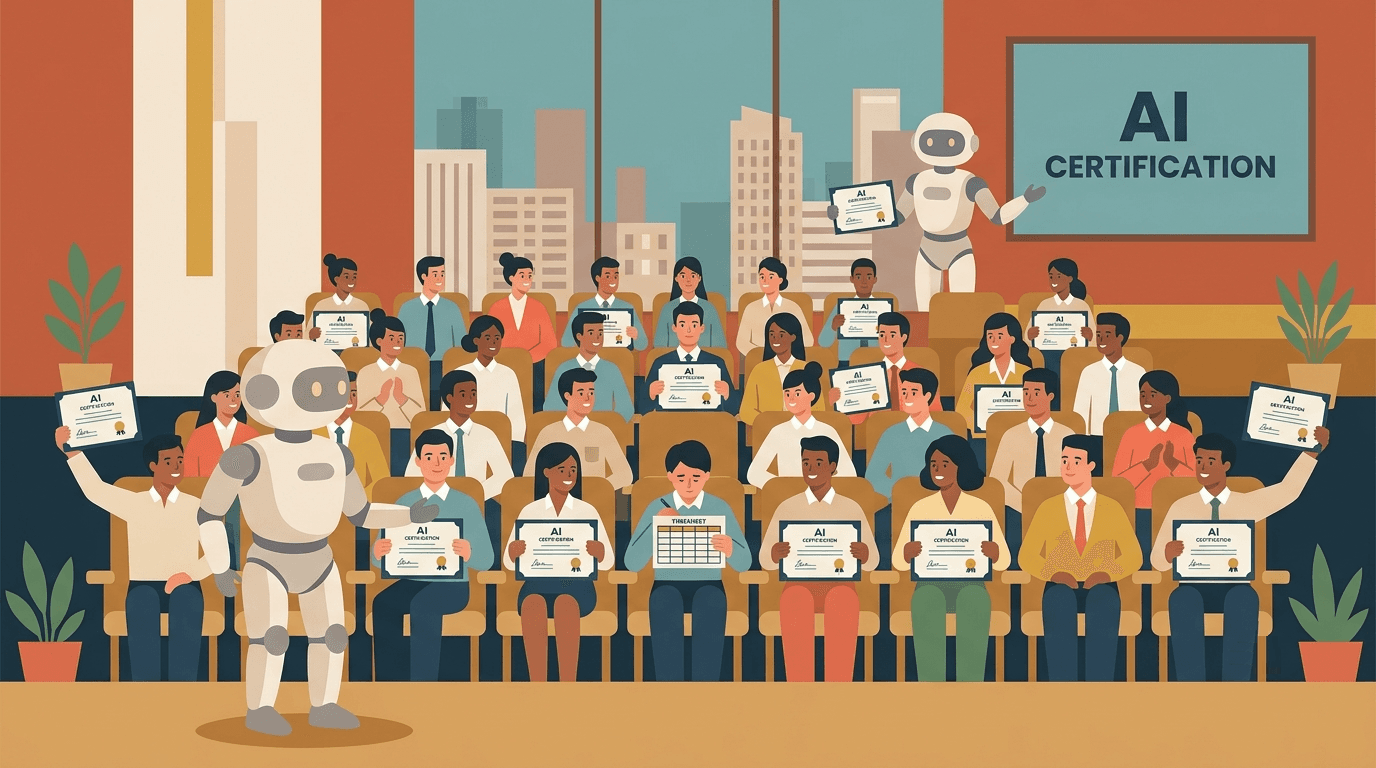
Last Thursday, ISCA and IMDA launched AIxAccountancy — a national programme to train 60,000 accountancy and corporate finance professionals in AI over the next three years. It's the first non-tech cohort under Singapore's National AI Impact Programme, which wants 100,000 AI-fluent workers by 2029.
When a government decides your profession needs retraining at this scale, the obvious question follows you home: will AI replace accountants in Singapore? Sixty thousand is not a pilot. That's a significant chunk of the entire profession here. Nobody spends this kind of money upskilling a workforce they expect to keep doing the same work.
So let's read the announcement the way we'd read a set of financials — not for what it says, but for what it implies.
What was actually announced
The short version: free AI training for Singaporeans and PRs working in accounting and finance, ISCA members, and students at local IHLs. Phase 1 covers foundations with ChatGPT, Claude, and Copilot. Phase 2 goes role-specific — building AI tools for fraud detection and tax computation, customised accounting chatbots, AI for budgeting and forecasting. Finish it and you get a certificate, a LinkedIn badge, and CPE hours. Over 20,000 people registered interest before it even launched.
I wrote a fuller breakdown of the programme — eligibility, phases, and my honest take on what it does and doesn't cover — in What Is AIxAccountancy? An Honest Look at ISCA's Free AI Programme. This post is about the bigger question: what the whole push means for the future of accounting jobs in Singapore.
Will AI replace accountants in Singapore? Read the minister's words carefully
At the launch, Minister Indranee Rajah said the profession must move beyond routine work to "judgment, analysis and decision-making, where the true value of the accountancy profession lies."
That sentence deserves a second read, because it contains both the reassurance and the warning.
The reassurance: the government is not planning for a profession that disappears. You don't build a national training programme, refresh ACRA's Skills Framework to embed AI fluency across all 44 accountancy job roles, and stand up a sandbox hub (AI Nexus, at ainexus.isca.org.sg) for a profession you've written off. This is what investing in a future looks like.
The warning: "move beyond routine work" is a polite way of saying the routine work is going away. Reconciliations, transaction categorisation, first-draft schedules, formatting the same monthly reports — the tasks that currently fill a large share of junior and mid-level hours. If your job description is mostly routine execution, the ground under it is moving, and the minister just said so on the record.
The job title survives. The job composition doesn't.
What this actually looks like inside a firm
Abstract predictions about AI are cheap. Here's the concrete version, from the same announcement.
PKF-CAP, a 250-person firm here in Singapore, already uses Copilot agents to draft client emails and to crunch financial statements for trend analysis in M&A work. The agents do the drafting and the number-crunching. The humans review, judge, and decide. And the firm's stated ambition is telling: they want agents that work "without constant prompting" — not tools you babysit, but systems that run and escalate to a human when judgement is needed.
Notice what did not happen at PKF-CAP: nobody was replaced by a chatbot. What changed is where the human hours go. Less time producing the first draft, more time deciding whether the draft is right and what to do about it. The analysis gets done faster; the accountability for the conclusion stays exactly where it always was.
That's the realistic near-term picture for most firms and finance teams — not mass redundancy, but a steady migration of hours from production to judgement. Which is only comforting if you're positioned on the right side of that migration.
The "AI bilingual" accountant
ISCA president Lee Boon Teck's framing at the launch was that the professionals who thrive will be "AI bilingual" — deep accounting expertise combined with the ability to use AI confidently and responsibly.
Both halves matter, and it's worth being blunt about why. AI fluency without accounting depth produces confident nonsense at scale — someone who can prompt a model into generating a beautiful variance analysis but can't tell when the model has quietly double-counted deferred revenue. Accounting depth without AI fluency produces excellent work too slowly to matter — the partner who insists on doing it the 2019 way while a competitor turns the same engagement around in half the time.
The uncomfortable maths for anyone mid-career: your expertise was the moat, and now it's only half the moat. The other half is currently being handed out for free, with a LinkedIn badge, to 60,000 of your colleagues.
What I'd actually do about it
I wrote back in December that AI isn't taking your finance job — but someone who leverages AI better than you might. Seven months later, the government has effectively turned that observation into national policy. The training is free. The badge is verifiable. The excuse is gone.
So take the course — it costs you nothing and the floor is rising with or without you. But understand what a course can and can't do. It teaches you the tools. It doesn't redesign your week. If you finish Phase 2 and go back to spending three days a month manually rebuilding the same management reports, you've learnt a language you never get to speak.
The real move is to look at your own timesheet the way Indranee Rajah looked at the profession: which of these hours are routine, and which are judgement? Then automate the routine ones ruthlessly — that's the part we spend our days on at Cheetah, automating the reports so the judgement work actually gets the hours it deserves.
Sixty thousand accountants are about to become AI fluent. The ones who benefit won't be the ones with the badge. They'll be the ones who cleared enough routine work off their desk to use it.

A finance professional turned product builder, Jarvin has built hundreds of reports by hand and knows what financial and operational reporting demands: customisability, auditability, scalability, and security. Having automated that work reliably, he's now helping advisory firms and finance teams do the same.
